
Table of Contents
Summary
Quick pay sounds convenient, but most truckers are overpaying for their own money. Broker quick pay fees often run 1%–5% per load, vary by broker, and still take days to hit your account. Freight factoring offers same-day or next-day funding, predictable rates, and works with all brokers. For many carriers, factoring is faster, cheaper, and easier to manage than quick pay.
Quick Pay Feels Convenient — Until You Add Up the Fees
Quick pay is a broker option that lets you get paid early, usually in exchange for a percentage of the load.
Here’s what that really means:
- Most quick pay fees range from 1% to 5%
- Fees vary by broker
- Costs increase as your revenue grows
Example:
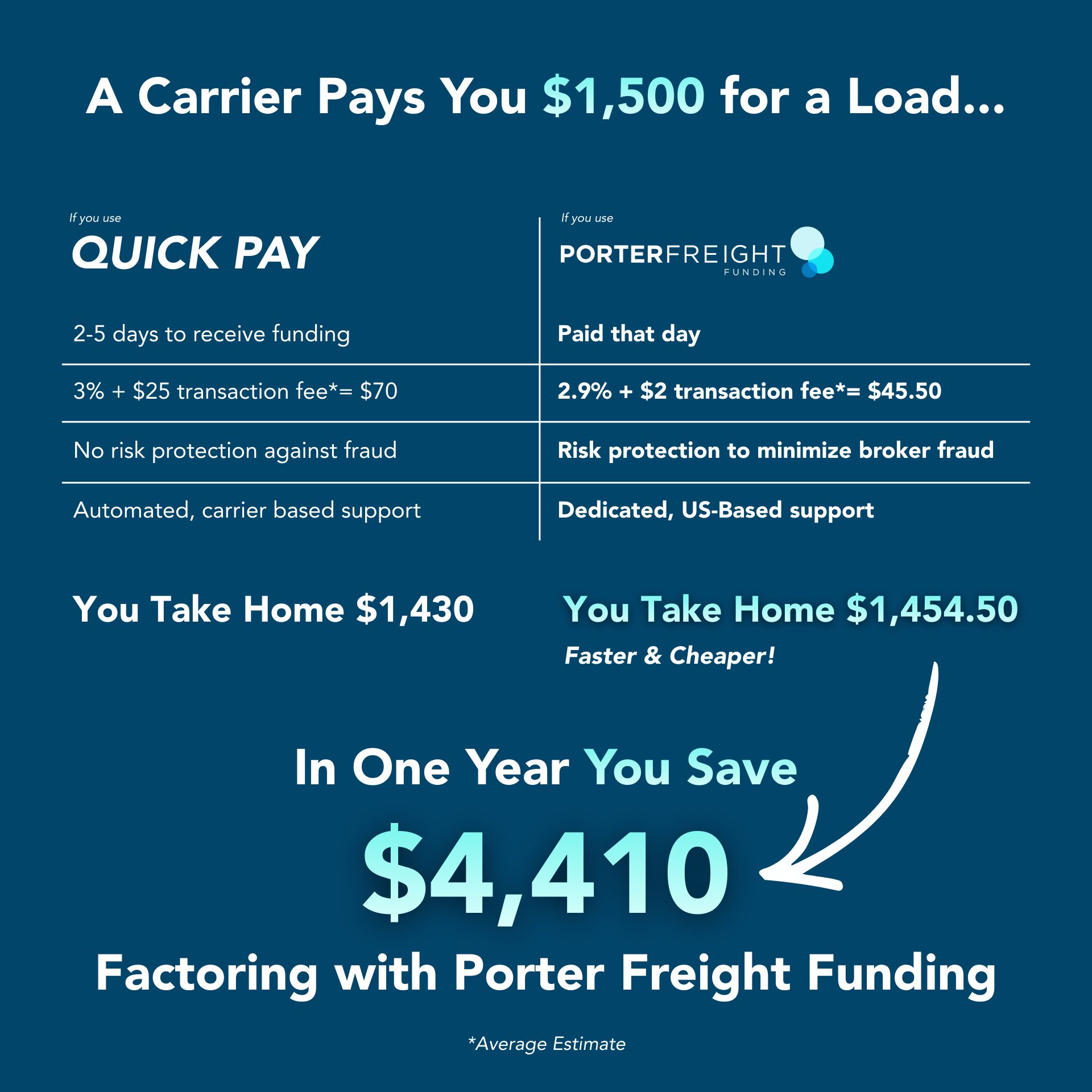
A $10,000 load with a 3% quick pay fee costs you $300 instantly — before fuel, insurance, or maintenance.
Multiply that across multiple loads per week and quick pay can quietly cost thousands per year.
Paying quick pay fees every week?
Quick Pay Isn’t Actually the Fastest Way to Get Paid
Most carriers assume quick pay is the fastest option available. It’s not.
Typical quick pay timelines:
- 2–7 business days after paperwork approval
Factoring timelines:
- Same day or next business day funding
If speed matters — and it always does in trucking — factoring often wins.
Need cash faster than quick pay?
The Hidden Headache of Quick Pay: Broker-by-Broker Chaos
Quick pay only applies to one broker at a time.
That creates:
- Different fees per broker
- Different rules per load
- Different payment schedules every week
For carriers running multiple lanes or brokers, that turns cash flow into a guessing game.
Factoring simplifies everything into one system, one rate, and one payment process.
Why More Truckers Use Factoring Instead
Factoring works by selling your invoice to a factoring company, who advances the money immediately and collects from the broker later.
What truckers like about factoring
- Same-day or next-day pay
- One predictable rate
- Works with all brokers
- Less back-office work
- Better cash-flow planning
Nearly half of all carrier payments already flow through factoring companies, because it’s reliable and scalable.
Ready for predictable cash flow?
Bottom Line: Stop Overpaying for Your Own Money
Quick pay isn’t always wrong — but using it as your main cash-flow strategy is costly and limiting.
Factoring gives you:
- Faster access to cash
- Fewer surprises
- One clean system
- Freedom to choose better loads
Quick Pay FAQs
Common quick pay questions include:
Quick pay is a broker-offered option that allows carriers to get paid early in exchange for a fee, typically between 1% and 5% of the invoice amount.
Quick pay and factoring can have similar percentage fees, but quick pay varies by broker and load. Factoring offers predictable pricing across all invoices, which often makes it more cost-effective over time.
Quick pay usually takes 2–7 business days. Factoring often provides same-day or next-day funding after invoice submission.
Yes. Factoring works across all approved brokers and customers, unlike quick pay which is limited to individual broker programs.
No. Many profitable owner-operators and fleets use factoring to improve cash flow, reduce admin work, and scale their business more efficiently.
For many carriers, yes. Factoring eliminates the need to manage multiple quick pay programs and provides consistent, faster access to cash.