Chameleon carriers are trucking operations that use a new or different business identity to hide a problematic safety or compliance history. They may share trucks, drivers, or ownership while operating under separate names. As freight brokers tighten carrier vetting, legitimate trucking companies face more verification checks, pickup delays, and lost loads when their records do not line up.
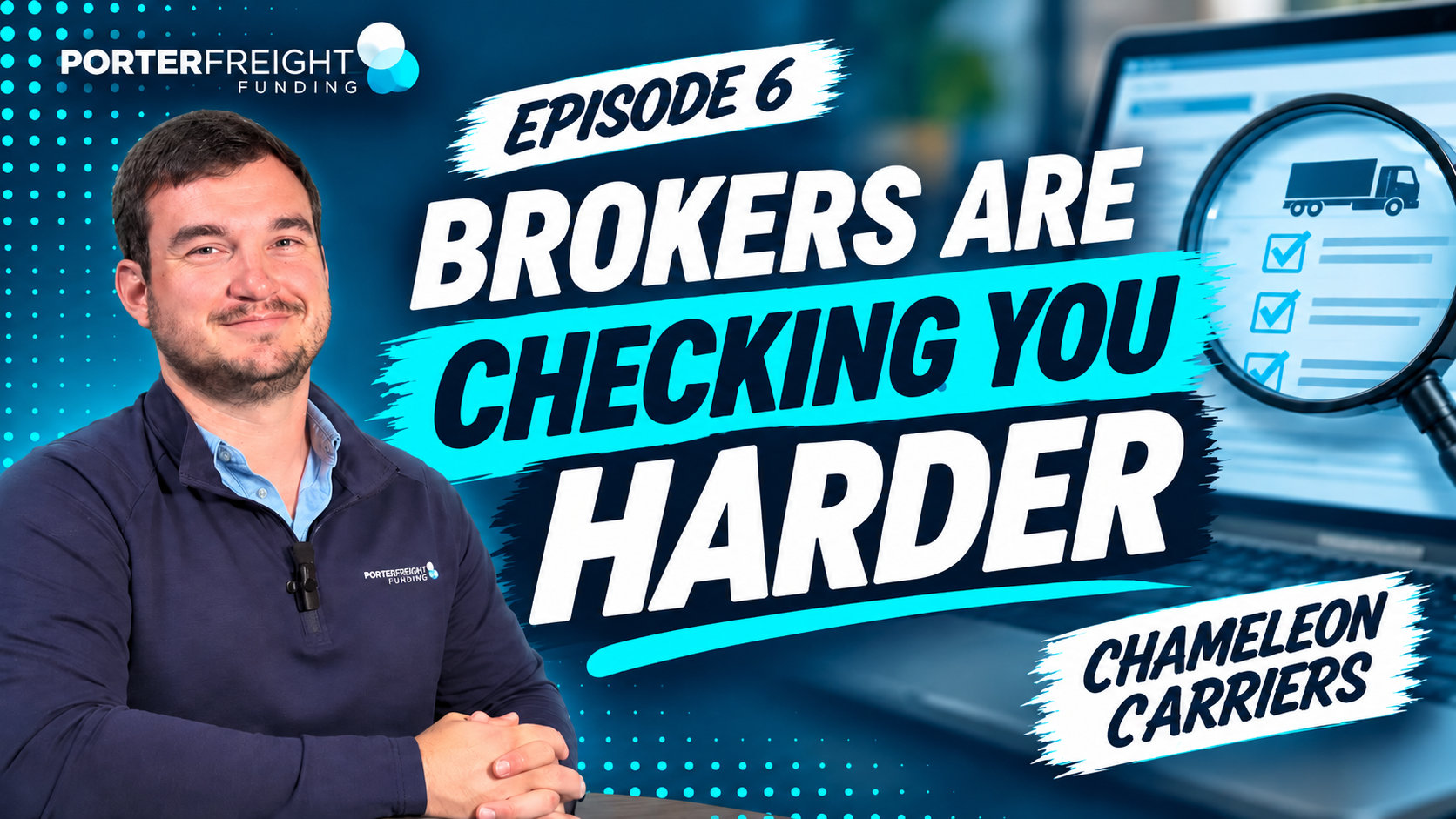
In Episode 6 of The Porter Standard, Grant Brackeen, Sales Manager at Porter Freight Funding, explains why chameleon carriers are drawing so much attention and shares three practical ways to protect your trucking company’s good name.
Jump To Section
Quick Answer: How Do You Protect Your Trucking Company From Chameleon Carrier Suspicion?
- Keep your operating history clean and consistent and document any name, ownership, or insurance change.
- Make sure your business information matches FMCSA records, including your profile in the new Motus registration system.
- Check your truck’s USDOT and MC identification before every pickup and tell the broker about driver or equipment changes in advance.
Watch Episode 6: Chameleon Carriers and 3 Ways to Protect Your Good Name
The Porter Standard is Porter Freight Funding’s weekly video series that helps carriers navigate the trucking industry, protect their businesses, and make informed financial decisions. New episodes drop every Thursday at 2:30 p.m. Central on YouTube.
What Is a Chameleon Carrier?
A chameleon carrier is a trucking operation that uses a new or different business identity to distance itself from a previous safety, compliance, or enforcement history. FMCSA and the trucking industry also call these reincarnated carriers.
In some cases, multiple companies look separate on paper but share the same trucks, drivers, ownership, or underlying operations. When one company builds a poor safety record, operations shift to another identity, creating the appearance of a fresh start. The U.S. Government Accountability Office flagged this practice as a highway safety risk in its report on chameleon carriers.
That makes carrier verification harder for brokers trying to separate legitimate transportation providers from bad actors.
Important: a change in company name, ownership, or insurance does not automatically mean fraud. Legitimate trucking businesses make operational changes for many reasons. The concern comes when those changes are used to conceal an unsafe or noncompliant operating history.
Why Are Freight Brokers Vetting Carriers More Closely?
Freight brokers are responsible for evaluating the carriers they hire and managing the risk of every load they move. Chameleon carriers, identity theft, and double brokering all make that harder, because a company’s current registration may not tell the full story of its operating history.
As a result, broker carrier vetting may include:
- Company names and ownership history
- USDOT and MC registration information
- Insurance coverage and continuity
- Operating authority and safety records
- Business addresses and contact information
- Driver and vehicle identification
Even legitimate carriers can hit delays if their information is inconsistent or hard to verify. Picture calling about an available load, only to learn a discrepancy in your company records keeps the broker from approving you. That delay can hand the load to another carrier.
3 Ways to Protect Your Trucking Company’s Good Name
In this episode, Grant outlines three practical steps carriers can take to strengthen their credibility with brokers and keep chameleon carrier suspicion off their name.
What Are Common Chameleon Carrier Red Flags?
Brokers look for several warning signs when reviewing a carrier’s operating history. No single sign proves a carrier is operating improperly, but here is what raises questions and how a legitimate carrier can stay ahead of it:
| Red flag brokers watch for | How a legitimate carrier stays ahead of it |
|---|---|
| Frequent or unexplained business name changes | Keep paperwork that explains why and when the name changed |
| Inconsistent ownership information | Make sure ownership on file with FMCSA matches what you give brokers |
| Unusual insurance changes or lapses | Maintain continuous coverage and send updated certificates promptly |
| Mismatched registration details | Claim and review your USDOT record in Motus and fix outdated info |
| The truck at pickup does not match the assigned carrier | Check USDOT and MC markings before dispatch and report changes early |
For legitimate trucking companies, the best defense is accurate records that are easy to verify.
Why Should Carriers Vet Freight Brokers Too?
Carrier vetting should not be a one-way street. While brokers check the legitimacy of trucking companies, carriers should check the brokers they haul for. A carrier can run professionally, keep perfect records, and deliver on time, yet still take a hit if a broker pays late or never pays at all.
Before accepting a load, verify the broker’s operating authority, business details, payment reputation, and creditworthiness. A broker credit check before hauling is one of the simplest ways to protect your cash flow, especially when fuel, driver pay, and maintenance bills are due.
Once you are a Porter customer, you get free, unlimited broker credit checks processed instantly in PorterGO, plus fraud mitigation support built into the funding process. Our freight factoring gives eligible carriers Same-Day Funding on approved invoices, so you can focus on running and growing your business instead of chasing your money.
You shouldn’t have to spend your day chasing your money.
Talk with Porter about freight factoring built around control, cash flow, and people. Call (205) 397-0934 or book a quick call.
| Book a Factoring Consultation |
Protecting Your Reputation Is Part of Running a Strong Trucking Business
Chameleon carriers create real challenges for legitimate trucking companies, but a trustworthy operating history sets your business apart. The three recommendations from this episode:
- Keep a clean, consistent, well-documented operating history.
- Make sure your business information matches FMCSA registration records, including Motus.
- Check your truck identification and dispatch details before every pickup.
Together, these steps reduce unnecessary verification questions and show brokers your business takes professionalism seriously. As the trucking industry keeps strengthening fraud prevention and registration, being easy to verify is quickly becoming part of doing business.
Frequently Asked Questions About Chameleon Carriers
Watch More Episodes of The Porter Standard
Through The Porter Standard, Grant Brackeen shares practical insights on trucking operations, industry developments, financial management, and the challenges carriers face every day. New episodes are released every Thursday.
Subscribe to Porter Freight Funding on YouTube and follow along on LinkedIn, Facebook, Instagram, and TikTok.
About the Author
Grant Brackeen
Sales Manager, Porter Freight Funding
Grant Brackeen is Sales Manager at Porter Freight Funding and host of The Porter Standard, a weekly video series with practical insights for trucking companies. Grant covers industry developments, operational challenges, and strategies that help carriers manage their businesses more effectively.