What is Freight Factoring?
Updated June 25, 2026
Freight Factoring Guide for Trucking Companies
Freight factoring is a financial service that allows trucking companies to turn unpaid invoices into immediate cash instead of waiting 30 to 90 days for payment. Carriers use factoring to improve cash flow, cover fuel and operating expenses, and keep trucks moving without delays. Porter Freight Funding helps trucking companies get paid faster with simple, transparent factoring solutions built for owner-operators and fleets.
How Freight Factoring Works (Step by Step)
Most trucking factoring companies follow a similar process that allows carriers to submit completed freight invoices and receive funding quickly. Instead of waiting on broker payment terms, trucking companies can access working capital within hours and continue operating without interruption.
Freight factoring follows a simple process:
- Deliver the load and get the BOL signed.
- Submit the invoice and BOL to your factoring company.
- Receive funding — typically within 24 hours.

Most trucking companies receive funding within 24 hours, helping cover fuel, payroll, insurance, and maintenance.
Who Uses Freight Factoring?
Freight factoring is especially helpful for owner-operators and small trucking companies that may not have large cash reserves. Fuel costs, insurance payments, maintenance expenses, and payroll obligations continue long before brokers pay invoices. Factoring helps carriers avoid cash flow gaps while continuing to accept loads and grow their business.
Many newer carriers also pair factoring with a fuel card program to reduce fuel expenses and improve daily cash flow management.
Benefits of Freight Factoring
Trucking companies use freight factoring to solve one of the biggest challenges in the industry: delayed payments. Brokers often take 30 to 90 days to pay invoices, while expenses like fuel, repairs, and payroll are immediate.
Freight factoring offers several advantages for trucking companies:
- Fast access to cash (often within 24 hours)
- No debt or loan payments
- Predictable cash flow
- Reduced administrative work
- Credit checks on brokers and shippers
- Support with collections if needed
For many carriers, factoring becomes a core part of running a stable and scalable business.
How to Choose a Freight Factoring Company
Not all freight factoring companies offer the same terms, tools, or support. Before signing a contract, carriers should evaluate each of the following:
Advance Rate The advance rate is the percentage of the invoice the factoring company pays upfront. Industry standard is 90–95%. Ask any factoring company for their exact advance rate — some advertise high rates but apply conditions that reduce the actual payout. Porter Freight Funding advances 95% on approved invoices.
Factoring Rate (Fee) Factoring rates typically range from 1% to 5% of the invoice value. Lower rates are not always better if they come with hidden fees, minimum volume requirements, or long contract lock-ins. Ask for the all-in cost, not just the headline rate.
Chargeback Window The chargeback window is how long the factoring company waits for a broker to pay before charging the invoice back to the carrier. The industry standard is 60 days. A longer window gives carriers more protection and time to resolve disputes. Porter’s chargeback window is 90 days or more — and during that period, Porter’s Account Resolution Team pursues the broker on your behalf.
Termination Fees Many factoring contracts include early termination fees that can run into thousands of dollars. Carriers who’ve been locked into a contract that no longer fits their business know how damaging this can be. Ask directly: “Is there a termination fee, and what are the notice requirements?”
Minimum Volume Requirements Some factoring companies require a minimum number of invoices or a minimum dollar volume per month. This can be a problem for smaller carriers or those with seasonal freight patterns. Ask whether there is a minimum volume requirement before signing.
Fuel Card Access A bundled fuel card is one of the most practical value-adds in factoring. It reduces out-of-pocket fuel costs and simplifies cash flow. Ask whether the fuel card is included, what network it runs on, and what the discount structure looks like. The Porter Fuel Card runs on the EFS network and is available to all factoring clients.
Customer Support Model Some factoring companies route all calls to a general support queue. Others assign a dedicated account rep who knows your specific account and lanes. For carriers who haul for a mix of brokers and need help resolving disputes or verifying credit, a dedicated rep is a material advantage. Porter operates on a dedicated US-based rep model.
Recourse vs. Non-Recourse Recourse factoring means you are responsible if the broker doesn’t pay. Non-recourse shifts some of that risk to the factoring company — typically in cases of broker bankruptcy. Ask exactly what “non-recourse” covers before assuming it protects you in all non-payment situations.
Freight Factoring Contract Terms: What to Compare
| Contract Feature | Industry Standard | Porter Freight Funding |
|---|---|---|
| Advance Rate | 90–95% | 95% |
| Introductory Rate | Varies | 1.5% for first 60 days |
| Standard Rate Range | 1%–5% | Based on volume and terms |
| Chargeback Window | 60 days | 90+ days |
| Termination Fee | Common | 60 days notice to terminate without fee |
| Minimum Volume Requirement | Often required | None |
| Fuel Card Included | Varies | Yes — EFS network |
| Broker Credit Checks | Varies | Unlimited, instant via PorterGO |
| Mobile App | Varies | Yes — PorterGO (free) |
| 24/7 Fund Access | Rare | Yes — PorterWallet |
| Customer Support | General queue | Dedicated US-based rep |
| Setup Fee | Varies | None |
Rates and terms current as of 2026. Always request a full contract summary before signing with any factoring company. See how Porter’s terms compare in detail →
Freight Factoring vs. Quick Pay
Both freight factoring and quick pay help trucking companies get paid faster, but they work very differently.
| Feature | Freight Factoring | Broker Quick Pay |
|---|---|---|
| Funding consistency | Predictable | Varies by broker |
| Credit support | Often included | Usually unavailable |
| Fuel advances | Common | Rare |
| Collections support | Yes | No |
| Funding speed | Often same day | Varies |
| Applies across all brokers | Yes | No (only the broker offering it) |
Trucking companies comparing payment solutions often choose factoring because it provides more consistent cash flow support and additional business tools.
How Much Freight Factoring Costs
Freight factoring typically costs between 1% and 5% of the invoice value, depending on volume, customer quality, and contract terms.
Key factors that affect rates:
- Monthly invoice volume
- Creditworthiness of brokers
- Length of the contract
- Additional services included
Unlike quick pay, factoring provides consistent pricing across all loads, making it easier to predict costs over time. Porter Freight Funding offers an introductory rate of 1.5% for the first 60 days.
Recourse vs. Non-Recourse Freight Factoring
Recourse factoring means the carrier is responsible for repaying the advance if the broker does not pay within the chargeback window. This is the most common type of freight factoring. The factoring company takes on less risk, so rates are typically lower. Carriers using recourse factoring should pay close attention to the length of the chargeback window and whether the factoring company provides active collections support before the chargeback is triggered.
Non-recourse factoring means the factoring company absorbs the loss in specific circumstances — most commonly, broker bankruptcy. It does not typically protect carriers in every non-payment situation, such as disputed invoices or loads with paperwork issues. Because the factoring company assumes more risk, rates for non-recourse arrangements are usually higher.
The practical question for carriers: How long is the chargeback window, and what does the factoring company do during that window? A factoring company with a 90-day window and an active collections team often provides more real-world protection than a non-recourse contract with a 45-day window and no collections support.
Get Paid Faster With Porter Freight Funding
Porter Freight Funding helps trucking companies improve cash flow with fast funding, transparent pricing, fuel savings, and dedicated customer support from a real team that understands trucking.
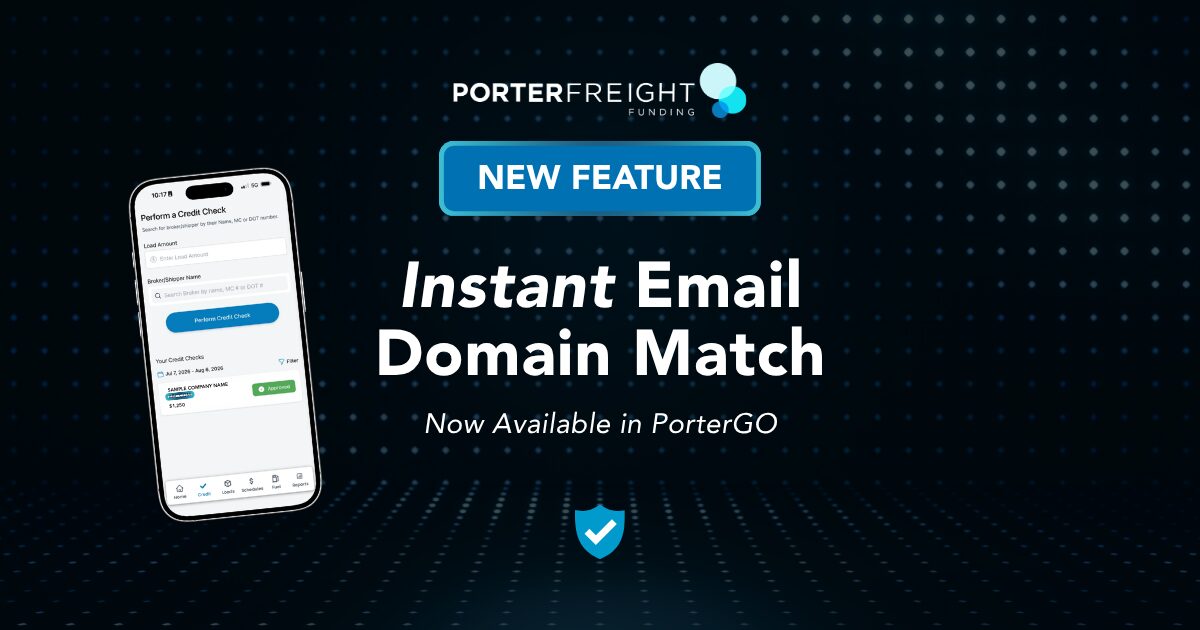
Carriers can also access broker credit checks through PorterGO to make more informed load decisions before hauling freight.
Businesses looking for freight factoring for new trucking companies can learn more about programs designed specifically for newer carriers and growing fleets.